By Dave Kot, MS
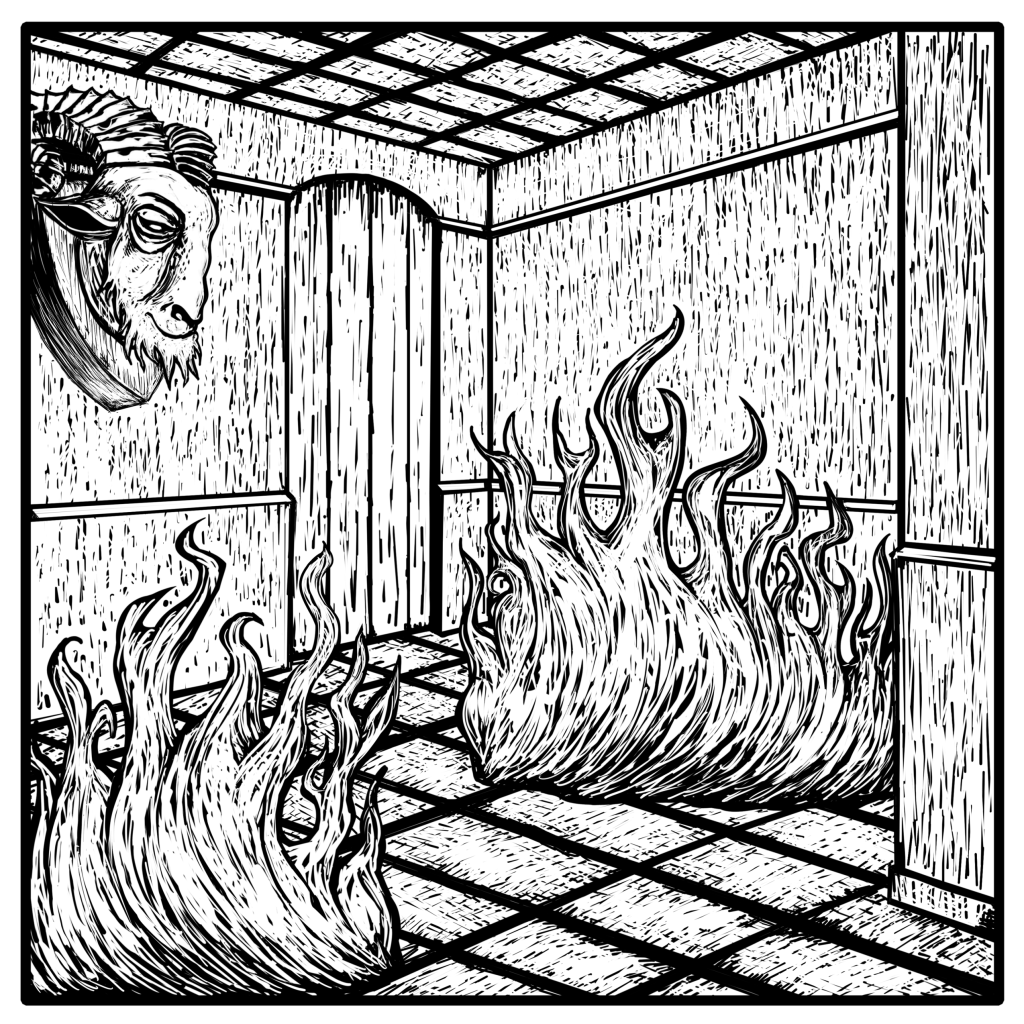
Searching for secret doors remains one of the defining rituals of dungeon-crawling
games. A player describes how they inspect the room. Torches burn lower. Wandering
monsters grow more likely. The Thief kneels beside suspicious stonework while the rest
of the party stands guard in nervous silence. Few procedures capture the tension of old-
school exploration more cleanly than this image.
In early editions of Dungeons & Dragons, these search results were intentionally
uncertain. A Thief might have a 1-in-6 chance to locate hidden architecture through
active searching. Elves could passively notice concealed features simply by moving
near them. The crucial detail, however, was (and still is) that searching always carried
risks. As time passed, the dungeon continued evolving and moving as a living
ecosystem.
Where many referees struggle is what happens after the roll. Too often, a failed search
simply ends the interaction: “You find nothing.” Mechanically, this is legal. Procedurally,
though, it flattens the exact style of play old-school games are trying to encourage. If
players spend resources, expose themselves to danger, and roleplay their examination
of the environment thoughtfully, then a hard conversational dead-end teaches them that
curiosity itself may not matter very much, or fail.
I think this disconnect becomes especially noticeable at many neurodivergent tables.
For a lot of autistic and neurodivergent players, tabletop games are appealing precisely
because the social rules of engagement are explicit, stable, and shared by everyone
present. The procedures are written down. Cause and effect can be observed. The
game world behaves like a system that can be explored collaboratively rather than a
performance that must be interpreted correctly. That structure creates safety and trust,
and this is why players investment in their characters at the table.
When a referee tells a player “there is nothing here” after a failed roll, it introduces a
profound systemic incongruence. For players who rely on literal, written-down rules of
behavior and consequences to navigate social spaces, this hidden contradiction can
damage expected procedural trust. If the physical reality of the dungeon changes based
on a dice roll rather than the player’s logical interaction with the world, the system can
begin to feel arbitrary. The world stops feeling like a persistent, coherent ecosystem and
starts feeling like a locked conversation where the referee decides what is real based on
what is scripted. Players feel disillusioned by their return on investments, and try less.
Emergent play solves much of this naturally by maintaining social gameplay interaction
and invested engagement. One of the great strengths of old-school sandbox gaming is
that discovery does not need to exist solely to advance a prewritten story. A hidden
room is not only valuable because it contains treasure or a mandatory plot clue. It is
valuable because interaction with the world creates new situations that nobody at the
table fully predicted beforehand, including the referee.
This reciprocal uncertainty becomes vital. Players should surprise the referee. Referees
should surprise the players. The dungeon should surprise everyone. When this rhythm
works, exploration stops feeling like permission-seeking and starts feeling like
collaborative discovery. This builds player skill to describe their actions clearly, and
lessen the need for future happenstance dice rolls. To be clear: class features like Move
Silently or Hide in Shadows should only be rolled as a failsafe against a player’s
narrative failure to paint their character actions in sufficient detail.
Importantly, this does not require massive preparation or sprawling megadungeon
design. Referees do not need to invent an entire hidden sub-level every time someone
taps a suspicious wall with a ten-foot pole. Most of the time, we only need the world to
respond dynamically enough that player curiosity continues generating momentum.
Instead of treating a secret door search as a binary success/failure gate, treat it as an
opportunity for the dungeon to reveal activity, instability, danger, or logistical pressure.
If you need inspiration at the table, try rolling a d6 when a character surprises with a
successful search (narratively or dice rolled):
SECRET PASSAGE DISCOVERIES (d6)
These discoveries assume the party spends a full dungeon turn searching.
d
6 HIDDEN DOORS AND SECRET ROOMS
1
The Pop-Out. A concealed panel swings open violently. Two exhausted cultists
drag a bound prisoner through the passage carrying stolen silverware and guttering
candles. They did not expect witnesses. One drops a ring of iron keys as the secret
door begins slowly grinding shut again over the next 2 rounds.
2
The Smuggler’s Niche. Loose stones conceal a cramped alcove containing fresh
water skins, lamp oil, dried meat, and a locked iron strongbox chained to the wall.
The supplies are warm. Whoever hid here expects to return soon.
3
The Draft. A breezy draft extinguishes every open flame. Once relit, soot and
smoke reveal the outline of a concealed wall seam. The swollen stone door must be
forced open with crowbars or spikes or leverage, producing enough grinding noise
to immediately check for curios wandering monsters.
4
The Chute. A pivoting flagstone drops inward beneath the searcher, revealing a
narrow grease-slick chute descending into darkness. Far below glimmers scattered
coinage and the faint sound of moving water. Descent requires rope and the
removal of all heavy armor.
5 The Slime. A grey ooze or gelatinous cube presses against a stone wall with
convincing camouflage. A secret door IS behind this monster, but it requires immediate attention, now. After defeating this guardian, roll a d6 and ignore another
5 result.
6
The Fresh Seal. Damp mortar and fresh fingerprints reveal a recently bricked-over
passage. Digging through requires two full dungeon turns of steady noise. Halfway
through, muffled voices from the opposite side begin arguing whether they just
heard digging too.
Tables like this are not meant to “save” failed rolls. They exist to preserve momentum
and keep players actively engaged in the social space of the game. Good emergent
play rewards attention without guaranteeing safety. Sometimes the players discover
treasure. Sometimes they create noise that draws patrols. Sometimes they accidentally
uncover evidence of dungeon factions moving nearby. Sometimes they learn something
useful while simultaneously making the situation worse.
That tension drives the entire social game engine. More importantly, it keeps the world
feeling alive. Over the years, I have found that many players, especially neurodivergent
players, become deeply invested when the environment consistently responds to
thoughtful interaction. This investment does not come because success is guaranteed,
but because the world itself feels coherent enough to push back meaningfully against
their choices. We feel seen.
Players remember those moments for years: the hidden chute nobody was prepared for,
the cultist caught mid-smuggling run, the slimy door mimics. None of those moments
required a scripted plot beat. They emerged naturally because the table stayed curious
long enough for the dungeon to answer back.
Discover more from Autism at Face Value
Subscribe to get the latest posts sent to your email.

