Tabletop roleplaying combat with miniatures and scatter terrain can feel overwhelming. New players often feel pressure to make the right move while others watch. This performance anxiety can lead to hesitation. Every option feels too risky.
I suggest a simpler approach.
In old-school play, success did not come from choosing the perfect action. Instead, we actively engaged and changed the situation before rolling any dice. Terrain is the first tool for that work.
Early games assumed that characters were fragile, with d4 Hit Points. Survival depended on reducing danger before randomization arose. This distinction becomes an expectation, and still applies to modern RPGs. Our goal is not constant heroics; our shared goal is to improve odds.
Use the terrain before the dice.
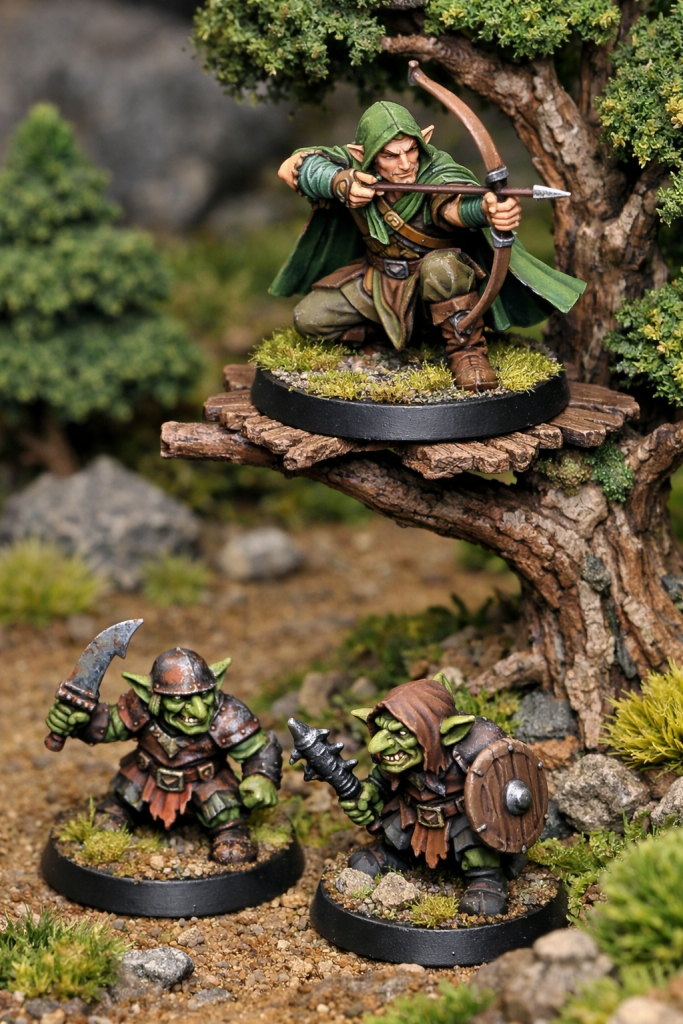
When Your Turn Begins
Run a short check:
Find something that blocks danger.
* Walls, corners, and elevation all reduce exposure.
Find a place that limits enemy movement.
* Doorways and narrow paths reduce how many enemies can engage.
Take one action that fits your character.
* Attack, cast, assist, or reposition.
That is enough action for one turn.
What This Looks Like in Play
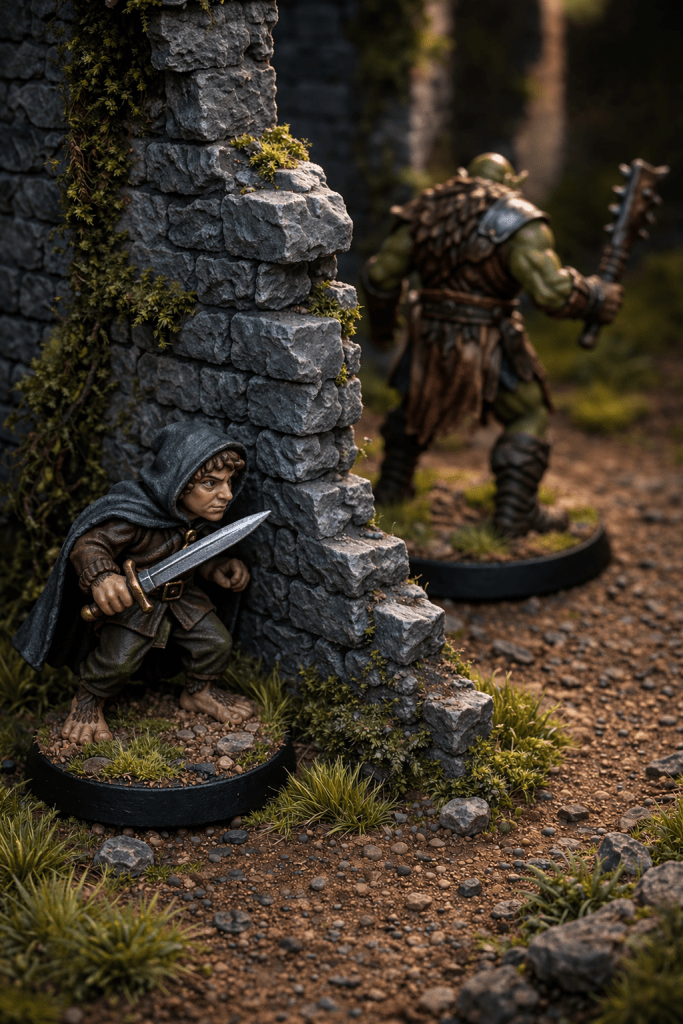
A thief moves behind a wall. The goblin cannot strike at once. Our thief attacks on the next moment, from a safer position.
A fighter stands in a doorway. Only one enemy can engage at a time. Incoming damage drops before any rolls to-hit.
A priest stays close to two allies. When damage lands, the response is immediate. No time is lost to movement.
A wizard adjusts their position for a clear line of sight. The spell reaches the target without added risk.
Each example follows the same pattern. The player changes the situation first. The roll follows.
What Counts as a Good Turn
A good turn does not require damage. If the situation improves, the turn succeeds.A good turn can reduce the number of enemies that can attack.
A good turn can improve position for the next round.
A good turn can support an ally without added risk.
Why This Works
Anxiety often comes from too many choices. Terrain reduces the number of choices.
Cover is visible.
Chokepoints are visible.
Safer positions are visible.
This approach reduces cognitive load. It creates a repeatable process. Research on the Worked Example Effect shows that structured steps improve performance more than open-ended evaluation. The process becomes familiar with repetition. Familiarity increases speed. Speed supports confidence.
Early systems such as the Dungeons & Dragons Basic Set did not assume balance or durability. Players relied on observation and positioning to manage risk. The Old School Renaissance (OSR) continues that approach. Player decisions shape outcomes more than character builds.
You are not the sole focus of the battlefield. You are part of a group that must survive it. Terrain supports that goal.
Keep It Small
On your next turn, choose one option.
Move behind cover.
Hold a narrow space.
Shift to a safer line of sight.
Then, act, showing what your character does well in similar situations.
One decision that improves your odds is enough.
Homework
Combat often includes rare moments of strong success. Many systems represent this with a critical result. Decide how your character handles that moment. Maybe your warrior spits curses in ancient tongues, or the archer bites their arrows between gritted teeth.
Keep the choice simple and repeatable.
Use the same description each time.
This creates a consistent identity without slowing play, and helps make for an impressive and memorable combat scene. Develop one or two other special options, like habits or rituals, and use them when the situation matches your preparation.
Comment, Like and share for more content like this.
Discover more from Autism at Face Value
Subscribe to get the latest posts sent to your email.
 Autism at Face Value