TARP Gaming Group Adventure Design – Part 1
Game Masters often ask the same question: Where do I start when building an adventure?
Therapeutically Applied Role-Playing (TARP) adventure design begins with the same spirit as any homebrew session, and adds a layer of intention. You craft more than a fun story; you shape a shared experience that models communication, trust, and self-awareness.
After more than five hundred tabletop sessions in both therapeutic and recreational settings, we collected tons of How-To Guides from some of the best hobby writers. In summary, we discovered that the best TARP sessions work when Game Masters (GMs) stay grounded in three things: simplicity, structure, and empathy. Your role as GM carries implied leadership and trust, so shoulder these duties responsibly.

Start with the Social Contract
Every successful game begins with mutual respect. A TARP GM carries an extra layer of work: you’re leading a collaborative, emotionally engaged table. Start by establishing basic boundaries that protect time, space, and comfort. Keep the expectations consistent, preferably written and reviewed regularly. Be clear regarding scheduling. Make predictable communication through mutually-agreeable email, texts, or group chats. A reliable tone reinforces safety before the dice roll.
Prioritize self-care. In a therapy environment, the facilitator models self-regulation. Think beyond hygiene or presentation and center your mental bandwidth. Hydrate. Rest. Choose systems that minimize preparation fatigue. Sustainable sessions begin with a sustainable GM.
Pick a Game You Enjoy Running
Sly Flourish often reminds us that we run better games when we love our systems or tools. The same truth holds for therapeutic play. Don’t choose a system because it’s popular; choose a tabletop roleplaying game system because it speaks clearly to you. Is it worthy of a financial investment? I prefer large print physical books over PDFs.
Shop locally. Look at smaller systems. Shadowdark and Pirate Borg stand out as fast-paced, low-overhead options. Their concise rulebooks (each under $60) make reading and re-reading easy. Deepen your fluency with multiple character combinations to avoid surprises. When you know your system by heart, you can stay present with players without flipping pages. For this write-up, let’s craft an original Pirate Borg adventure. We will commit to using the core rulebook and plan for a simple two-to-three-hour adventure.
Miniatures: Commit Early or Skip Entirely
Props and figures can enhance immersion. Be proactive. Look at your budget. Before scripting scenes, decide whether miniatures will appear. Remember: miniatures should represent tactical opportunities, not mere table decorations. Add appropriate scatter terrain, like boulders or trees. Miniature placement (and ultimately, its overall purpose) should reflect accurate and meaningful enemy actions happening in relation to the characters. Players may find it easier to see than the enemies’ imagined placement. Once you commit to using miniatures, build NPCs from the figures you already own or buy with frugal intent. Don’t chase the “perfect villain sculpts.” Let your (new) collection inspire the story. To continue our examples, I will use plastic miniatures from Island of the Crab Archon by Steamforged Games. I get 21 disgusting crustaceans across seven unique cuts. Even if I hadn’t purchased these miniatures, I could use them for cohesive inspiration and a relative starting point for monsters.
I prefer 3D miniatures because many players have ADHD-like challenges, but visual markers help them successfully focus on the adventure between turns. Small concessions like these help players enjoy the games and make great memories easier to recall. Empathy matters.
Study your miniatures like a field notebook: who looks dominant, observant, or wounded? These visual instincts can reveal character arcs naturally. Maybe the crab model with a large, chipped claw becomes the commander of a militant brood defending shrinking breeding grounds. It becomes a perfect mix of menace and empathy. Planning around available resources not only saves money but demonstrates mindful boundaries for your players and their characters: use resourcefulness instead of overconsumption.
Hook Players Fast with a Movie Mashup
Here’s an easy creativity hack: describe your adventure as two movies mashed together. Sly Flourish calls this tactic a “tone anchor,” a shorthand that helps everyone feel the campaign’s vibe.
Try: “Pirates of the Caribbean: Dead Man’s Chest meets a David Attenborough nature documentary.”
In a single sentence, players understand this world is wildly cinematic but grounded in ecological realism. They picture a coastal expedition, not generic dungeon crawling. These mashup pitches become emotional maps. It becomes your unspoken promise of what kind of story they’re joining. Every GM should practice these thirty-second mash-up descriptions.
Plan with Index Cards
Professor Dungeon Master’s minimalist approach pairs beautifully with Sly Flourish’s Lazy DM prep. These pillars within our hobby suggest simplicity as an inspirational guide. I suggest: replace elaborate notebooks with index cards. One card equals one playable idea.
We will begin with the most important NPC in your adventure: the Villain! This NPC is co-equal with two other NPCs, as inspired by Professor DM: the Sage and the Contact. I use purple colored index cards for my NPCs, but will share my GM Worksheet Guide to this point:
MODEL THE CAST & PROPOSED SETTING, Notebook or White Index Card
- Mash together two popular books or movies to describe the intended adventure idea.
- In addition to humans, which other core rules’ ancestry options seem like logical retentions? Which overlooked or undervalued ancestries seem uniquely positioned to thrive in this environment?
- Which classes offer the most specialized options that suggest highly-narrative play? Be sure to include a variety of different offensive/defensive/utility spells and combat specialization roles.
- Aside from Core Rules, cite additional source material used.
BUILD THE VILLAIN NPCs, Notebook, or See Color Coding Suggestions in Descriptions
- Index Card: Monster Faction. Pick a thematic monster or group excelling within this environment. Now, give this NPC faction an incompatible goal, like devouring countryside livestock (and villagers). Unless heroes directly intervene, this Monster Faction will achieve the entirety of its plan. On this card, follow this layout:
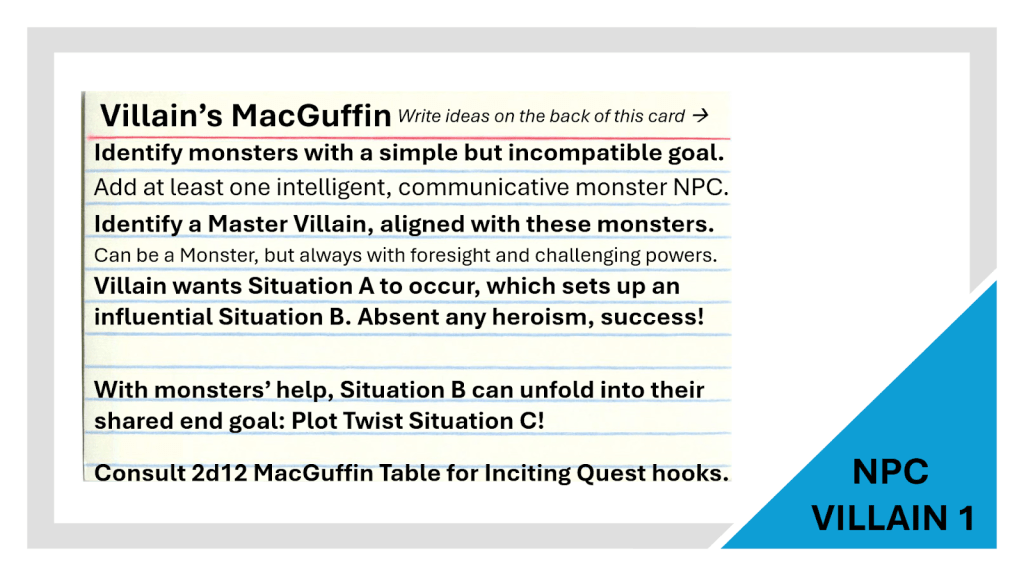
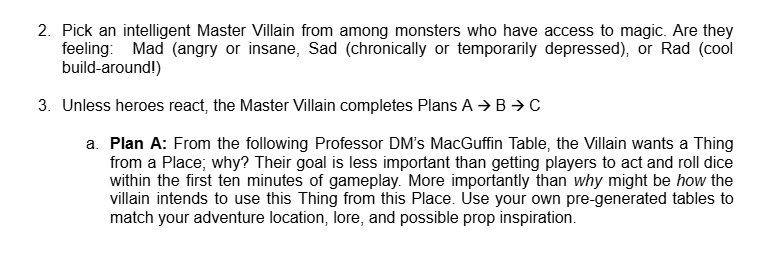
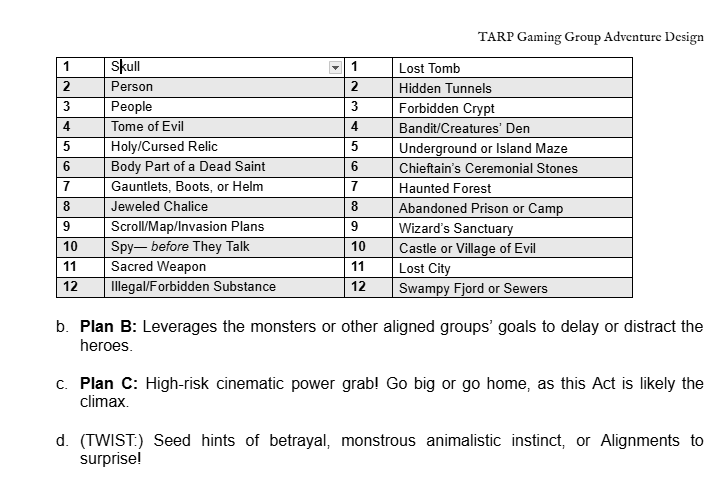
This master villain possesses a unique skill set. Pre-write detailed descriptions for epic visualizations. Whenever possible, use the Thing to accompany this Master Villain’s actions.
- Target the frail. Aim a ranged attack or spell, or directly engage the character with the lowest HP.
- Shift position. Move to break up the party, gain cover, or trigger traps to control the field surgically.
- Command minions. Call back-up, send allies to flank, or activate hazards to edge action economy.
- Exploit the environment. Collapse walls, unleash magical effects, or create obstacles with the dungeon itself as a weapon.
- Disrupt magic and healing. Force checks, silence spellcasters, or lock down areas with effects.
- Reveal a twist, taunt, or threaten. Change priorities or sow doubt; intimidate with words, reveal dark bargains, or confuse the party.
Like all named NPCs with plot influence, create a detailed description of this character, including:
- What does this NPC want right now? Do their actions (immediately) HELP or HURT the PCs?
- Why does this character care about the entire party (or just certain character(s))?
- How does their reputation precede them? Give them a descriptive epitaph to hasten backstory.
- What makes them instantly memorable, like an odd habit, scar, accent, item, or catchphrase?
- Is theirs a world of tactical combat, magical research, boundless exploration, or careful diplomacy?
- What hidden truth, flaw, or connection do they have, waiting for discovery or betrayal?
- How might they evolve into a turncoat, seek redemption, or become a threat?
- What essential numbers or abilities must you know about them (AC, HP, crucial skills or powers)?
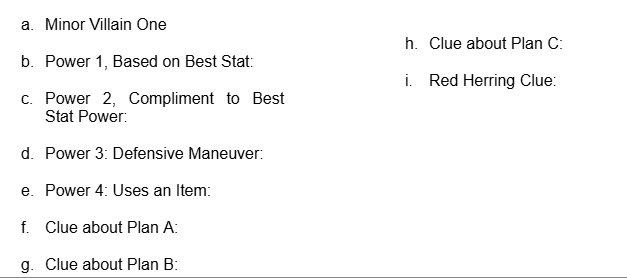
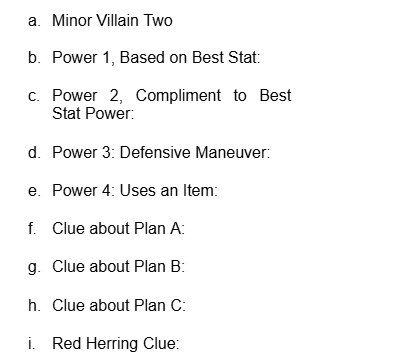
In addition to the NPC of the Master Villain please add two Minor Villains. First, the monster group or faction has 2 co-equal Minor Villains (not necessarily the same monster); create them following this guide:
Minor Villain One and Two get their own d4 unique combat actions and d4 clues about Master Plans.
CALL TO ACTION
Therapeutically Applied Role-Playing doesn’t need to sacrifice fun for intention. When done well, it’s fun because of that intention. The therapy hides within curiosity and collaboration. In both practice and play, adventure design becomes self-care: grounded, flexible, and cathartic.
If you can hold that balance between the joy of creative spontaneity and the discipline of emotional safety, you’ve already mastered the heart of a great GM’s approach. Whether you’re teaching self-regulation through crab duels or teamwork through storm-tossed voyages, your table can become more than a game. It becomes a shared story of growth.
I hope you completed your homework from last week. You can insert your own creative MacGuffin Tables while researching possible miniatures of tokens to use for your next adventure! Please feel free to share with me how you begin to prepare for your adventures. Do you use miniatures? In what ways are you mindful of your players and their needs or accommodations?
Discover more from Autism at Face Value
Subscribe to get the latest posts sent to your email.
 Autism at Face Value