Writing villains requires owning their unique perspectives. Across many cultures, we can agree upon some universal “evils,” like hunger (especially childhood hunger). However, using these examples reduces an antagonist into an also-ran. Readers easily sympathize with our hero despite whatever cool backstories we bestow.
Instead, look at villains (and heroes) through their own self-determinations and life choices. Many readers heard of the poor thief who stole bread to feed a family. Likewise, Robin Hood’s mission resonate with many readers who see themselves as underdogs. We can agree thievery remains unlawful and deserves social punishment. What line must a thief cross to lose our blind eye? Could said thieves dodge condemnation if they stole life–saving medicine? What if they minimally injured someone by accident (or, even intentionally) in their quest? How much harm might a hero inflict before we reconsider them as villains? Furthermore, how might they see themselves? Are they above reproach for their intentionality? What – if any – serious criminal charges will they face (and by whom)? What kind of judge or jury would convict them?
Heroes see villains all the time. Winners write history books, so “heroes” rise from a certain social collectivity. I believe just one special moment could change a hero into a villain. Allow readers to see a hero/villain from the others’ points of view. From this angle, writers must propel the story once hooking – and more importantly – surprising a reader. Again, simple social evils, like murder, have been repeated ad nauseum. Do something new by using fresh eyes in perspective.
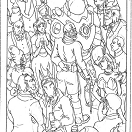
I’ll give a shocking example: Jesus of Nazareth!
Put down the holy water and pitchforks. For centuries, billions of people consider the good-teacher a pillar of kindness. Few people have any real problems with Jesus the Teacher. With these basic assumptions, I also agree. Allow me to illustrate how perspective dictates heroes and villains.
Imagine “Deborah,” a farmer’s widow. One day, her strapping sons arrive from their fields with elated spirits. Each young man has chosen to follow Jesus and hear more teachings. They quickly depart in love. Deborah looks solemnly at her untended crops. She has no other family or voluntary help. She withers like her thinning harvest. Now I ask: how might Deborah see Jesus of Nazareth at this time? As a writer, could you work with such provocative plot twists? Comfortable tropes rarely draw new readers.
Lazy writers will want an escape for their readers (and their cowardly selves), and somehow reassure everybody of their safe-spaces. Quickly, authors may want to side-step controversy and paint both Jesus and Deborah with wide smiles. Theirs is a world of never-ending fairy tales.
Dig deeper. In every good story, the ‘tagonists eventually meet. Let Deborah confront Jesus. What might that scene uncover? Easy answers include: 1) she joins her sons with zeal, 2) she quietly prays for help and somehow gets it, and/or 3) she passes with visions of her heavenly reward due to her sacrifices. Alternatively, Deborah just curses and shuffles away. She returns home and tills her field like Scarlet O’Hara (who, in my mind, was the original “Mary Sue”). By the way, what did Deborah’s sons do/say/think when mother met Jesus? Again, consider perspective.
How writers continue Deborah’s story depends on their skills to unseat (and reclaim) safe assumptions. Using a five-minute point of view, we can re-frame a globally-adored person. We begin cobbling future motivations for Deborah. We make her sympathetic, if for just for a second. Consider your own emotions if a close family member leaves to learn more about a new religion. Remember this example and feelings when considering your stories; heroes and villains always wrestle perspective.
To prove my point once more, wait and look at the comments section. Invariably, someone will consider my make-believe story blasphemy. Ironically, critics may best illustrate how valuable perspective can be; it can lure readers into seeing something you never wrote. Their implications show how certain viewpoints can make me – and anyone – into a villain.
Discover more from Autism at Face Value
Subscribe to get the latest posts sent to your email.
 Autism at Face Value