
We loosely modeled our independent comic books after the (now defunct) Comics Code Authority. From 1954 through 2011, comic book publishers self-policed its content. Since the United States Postal Office shipped comic books, content must have met certain standards or fail delivery. One restriction example was: “No comic magazine shall use the words ‘horror’ or ‘terror’ in its title.”
Meh. Other ideas sought to maintain civil respect to public institutions of education and law enforcement. Oddly, werewolves and zombies got canned. By in large, I believe the Comics Code Authority reflected a socially-conservative era and overcompensated for readers’ sensibilities. Most reasonable persons would agree to present themselves as inoffensive. However, I see direct correlations between declining social connectivity and presumed private or public offenses. Seemingly, we cannot agree to disagree. Furthermore, we quickly label opposing arguments as radical extensions of belief x or value y. Nobody seems happy unless everyone is unhappy.
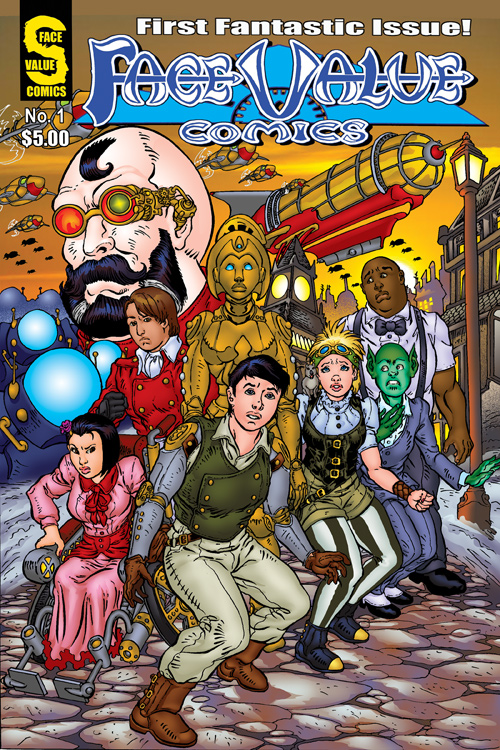
Now, add fictional comic book characters into this social disarray. Our featured hero is autistic. Some people will disapprove of my identity-first adjective. Instead, person-first language de-stigmatizes mental health challenges, but also ignores an individual’s right to (re)claim identity beyond well-meaning psychology textbooks. Inadvertently, I’ve likely angered or disappointed half of my audience. We have yet to discuss other characteristics of our hero, like…
“Wait- he’s male? You’re sexist, Dave. Be more inclusive. No, I didn’t look at the rest of your cast…and he’s Caucasian? You’re racist, Dave. Be more inclusive. No, I didn’t look at the rest of your cast. I choose to be offended by a fictional character.”
Worse, I recall professional feedback from a state psychologist. Via LinkedIn forums, she believed an autistic comic book hero would be “dangerous.” According to this doctor, our character gives kids too much “hope.” I wonder what she’s doing these days…
With whatever choice I or my team make, we risk offending someone somewhere somehow. Isn’t this a risk shared by any social engagement? As we all tip-toe around important and sometimes controversial topics, we risk having a conversation blow-up in our face. In one small way, a neurotypical person may share these experiences and fear with those having an autism or anxiety diagnosis. Regardless of good intentions, one critical mistake – even made unknowingly – may cost friendships, jobs, and self-worth.
Having the Comics Code Authority loom overhead only tells me what I should NOT do. It suggests I play nice with everyone and not offend – see, another example of what NO to do. I’m using this blog to share my musing about comic book story craft, and my own maturation as a writer and socially-engaged person with autism. In the near future, I’ll begin outlining to-do steps in our writing. Please consider joining our Face Value Comics Mentoring Group wherein I add more details.
Dave Kot
Face Value Comics

Discover more from Autism at Face Value
Subscribe to get the latest posts sent to your email.
 Autism at Face Value